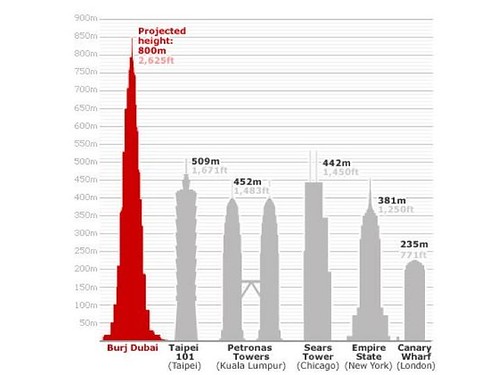
This graph speaks for itself.
A small Dubai hotel

I saw a photo of Nadal and Agassi playing on top of this hotel !
Dubai pictures

Blogging is awesome. I made a post yesterday about the random thought of going to Dubai and New Zealand. I had a reader from New Zealand invite me to coffee and had someone send me an awesome power point about Dubai. Check out these photos of Dubai !
My 40th birthday revisited
I'm still planning on taking time off sometime next year to celebrate my 40th birthday. I've been thinking about going to New Zealand, Nepal, or Italy....but someone just suggested Dubai! It sort of caught me off guard. I don't know the first thing about the place ...other than they have man made islands. Can anyone tell me positive or negative things about Dubai as a place to visit?
Seattle Entrepreneurs Open Coffee home page for the year
I just set up this page on upcoming for the Seattle Open Coffee weekly meetings we've been having.
It's crazy but Upcoming doesn't let you set up recurring appointments so I put this out until December ....and Meetup wants to charge 10.99 per month to organize this event.
Sorry Scott -- but at that price I have to go with your competitor which is free even if they don't let me make recurring appointments. Scoot -- is Scott Heifferman the CEO of MeetUp and a friend.
All are welcome:
Every Tuesday, 8:30AM - 10:00AM, Louisa's at 2379 Eastlake Ave. E, Seattle
Emotion, blogging, business
I just read a great post by a young entrepreneur / author named Ben Casnotcha. He's got a great blog here. His post about the lack of emotion in many blogs is excellent (like many of his posts. I encourage you to read it.
I've thought about this phenomena in the context of my own blog too. How much of my personal life to share ....not to share. At teh root of it, I've been reluctant to get into important life matters around marriage, sex, parenting, friendship, etc because blogs are inherently public and -- well-- I don't want to write something that I'd regret being public later.
That said I think there is a whole lot of undocumented and unshared wisdom in the minds of our elders about this thing called life and wish I could find more of it online and in blogs. If anyone has suggestions of blogs to read on the topic please let me know.
Judy's Book and Mpire
John Cook of the Seattle Times has been writing here about the similarities between Mpire and Judy's Book. I actually think that the two companies are more complimentary than competitive. Judy's Book is really about local shopping. We are a destination site for you to find out what's on sale near you. If you want to do shoe shopping this weekend -- and you're wondering what's on sale / where near your home....i.e. where you can get a deal on shoes then Judy's Book is the place for you. Mpire -- as I understand it, is about shopping analytics of new and used products. You want to know what's happened to the price of ipods over time then Mpire will deliver this to you. I'm looking forward to seeing how both services evolve over time.
Seattle Open Coffee Success
This was the fourth meeting of Seattle Open Coffee. It has totally exceeded my expectations at this point. Today was the largest showing yet....17 people. At this point the events are primarily social and networking. People come -- some new faces each week and some regulars. We have coffee and breakfast and chat about our start ups /early stage companies. I'm not sure exactly what to do with these events -- whether to add any structure at all or not. In the meantime, they're fun events and there seems to be a group of regulars who can carry this forward. So the experiment continues. If you've got ideas about what we should be doing at these events please send it to me....
This OpenCoffee is held each week on Tuesday at 8:30AM at Louisa's. See you next week.
A new home page!!
If you're wondering what we're up to at Judy's Book -- I think our new home page tells the story well. Check it out!
A sample term sheet for a bridge note
This is an outline of a term sheet for a bridge note. I thought I'd post this so people could see a real life example. I'm no lawyer so don't just copy and use...or if you do -- copier beware. Also, this will probably be my last post on bridge notes for a while....I'm going to move onto other topics :-)
Issuer: XXX Corporation (“Company)
Investors: Accredited Investors acceptable to the Company which will invest a minimum of $25,000 (unless otherwise approved by the Company) (“Investors”)
Type
of Security: Debt convertible (“Notes”) into the same stock class, share price
and terms as the next round of equity investment of a minimum of $2,000,000,
including conversion of this bridge financing (a “Financing”).
Note
Provisions
Amount of Investment: Up to $500,000, subject to increase at the discretion of the Company.
Closing: Month XX, 2007 Term: 12 months from the date of issuance of the first Note (“Maturity”).
If
the Company is acquired prior to Maturity or the next Financing, then the
principal and accrued interest automatically converts into Common Stock at a
price equal to the price established in the transaction, minus a 25% discount;
provided that if the Company acquisition valuation exceeds $12M, then such
discount shall be the greater of 25% or that discount which is needed to result
in the Investors converting at a $12M acquisition valuation.
If the Company fails to obtain a Financing by Maturity or the Company is not acquired prior to Maturity or the next Financing, and the Note remains outstanding at Maturity, the Company shall have the option to repay the Note in full or to convert the Note into Common Stock at a $4M preconversion Company valuation.
Additional Note Terms: Company may not prepay the Note prior to Maturity. Payment after Maturity is upon ten days prior notice to Investor.
The Notes are unsecured.
The Notes will be subordinate and junior in right of payment to the prior payment in full of all Senior Indebtedness. Senior Indebtedness consists of any existing and future commercial bank lines and equipment lease lines, along with such additional or replacement commercial loans and equipment leases that are subsequently approved by the Board of Directors.
Other
Matters
Documents: Counsel to Company shall draft form of Notes.
Closing
Conditions: Closing subject to execution of definitive legal documents
When to use a bridge note...
I've seen a number of entrepreneurs using bridge notes as an alternative to seed or series A
rounds – they’re using them when they do not have sight on a real institutional
round. Bridge notes should not be used as way
to finance a company without putting a valuation on the company.
In my opinion, convertible bridge notes are best used when
the next round of financing is visible and the company needs a bit of cash to
hold itself over to the next round. I do believe that's why they're called "bridge" notes.
bridge notes again!?
I don't buy the typical argument that entrepreneurs like myself have given to angel investors re: convertible bridge notes.
The typical argument (I hear and have made) in favor of bridge notes is that the entrepreneur wants to avoid "negotiating" a valuation with angels. Entrepreneurs will say:
- It's too early to set a valuation.
- Rather than "fight" about valuation today, let's put that off until some venture capitalist comes in and sets the market valuation.
Here's why I don't buy those arguments....when a venture capitalist comes in there's not going to be much of a fight on valuation. Price in early stage deals (Series A), typically are in the same zone. Venture capitalists know what market rate is and generally stay within that range for early stage companies. So, in my mind, these entrepreneurial arguments amount to effective delay tactics and surface all the problems I wrote about yesterday when it comes to bridge notes. It's much more straightforward to establish a fair valuation for the company in these seed situations and sell the stock. The valuation should not be a fight with angels either ....both sides either agree to a deal or don't. It's pretty straightforward. My belief is that entrepreneurs (cleverly) want to minimize dilution and so they use bridge notes to carry the company to a higher valuation. But as someone, who has and is willing to take the risk of really "early" money -- I believe I should get paid for that risk as an angel investor.
It's important to note that I think there is a role for bridge notes in small company financings....it's just not how they're being used most of the time today.
Disclaimer: My comments on bridge notes are specifically in relation to the use of bridge notes as a substitute for seed equity financings.
My commute just got a whole lot worse

For those of you who know the geography of Seattle, you know that there are a few small but very important bridges that connect the city together. This is a picture of the university bridge which is part of my daily commute. Normally, my commute is about 10 minutes. I'm expecting my commute to be close to an hour over the next month while this gets fixed.
It make s me wonder what is going to happen when the viaduct fails in Seattle before they can agree on what to do to replace it.
The Kefta Story (Part IV)
Part 4 – Lessons learned
- There are lots of lessons to be learned but my top lessons follow:
- Pick your partners carefully. When the chips are down you learn the nature of your partners. Hopefully, they play cleanly and fairly. Some don’t. It sucks when this happens.
- The way Brad Feld played this investment is what makes him such a great venture capitalist. He played it for the long term and was willing to invest a small amount of money even when things looked bleak because it was the right entrepreneurial thing to do. In doing so, Brad managed to retain a relatively large portion of the ongoing company and recover much of his investment.
- Entrepreneurial perseverance counts for a Lot!!
- I don’t know of many start up successes that don’t have moments where the business life is threatened in some material way.
- As an angel investor, seriously consider participating in all the rounds of a venture – especially the down rounds!
- Obviously, it's a rich history to condense into a blog post. Congrats to all the hard working folks at Kefta for a job very well done.
The kefta Story (Part III)
Part 3 - June of 2003 till now
- So after raising 250K of capital, we had to pay out a few tens of thousand of dollars to amicus to buy them out. The company had very limited capital to run operations. The company downsized to the founding team and has been running cash flow positive every since.
- It was a depressing summer of 2003, but the founders never lost hope and never stopped selling.
- Last year, the company did several millions of dollars in sales, was highly profitable and perfectly positioned to capitalize on the exploding market in online personalization.
- In early 2006, the founders were growing tired and as a board we made a decision to either sell the company or raise additional capital rather than to continue to bootstrap the company.
- In mid 2006, Acxiom initiated conversations with the company. A few weeks ago, Acxiom was the lucky buyer of Kefta. I think they got a great deal and a year from now will be thinking that they were lucky to acquire the company. Time will tell.
I'm a sucker
Okay. I hate to say it....I hate to admit it. But last night, I note only found myself watching the American Idol Gives Back Episode and was amazed to learn they had 70 million votes....but I also ended up contributing $250 to the show. I was sucked in...schmaltzy, cheesy, whatever....I did it and I admit it....and I'm kind of a little proud. I'm really becoming a sucker now.
The Kefta Story (Part II)
Part II - May of 2003
- After a lot of hard work in early 2003, the company was making some decent progress with large enterprise customers like Societe Generale, Verizon, and other large customers and had gotten some of the customers to renew their annual service contract. (FYI -- Kefta sold an annual service contract) The company needed additional investment to continue to scale sales. Kefta negotiated with its current investors and managed to structure an internal round of $2,000,000 investment. The investment was going to be led by Amicus again. Softbank agreed to participate if and only if Amicus would. Softbank didn't want to carry the financial risk of the company alone.
- There were a bunch of partner meetings at both Amicus and Softbank to get the required approvals necessary to complete the round -- and ultimately Philippe was successful. The round was schedule to close in May 2003.
- This is where the story gets really interesting.
- I remember well the call at 10:30PM from Michael Samols of Amicus -- the day before we were scheduled to close the financing. He said, "I've got cold feet and I'm not going to close tomorrow". I could tell by the tone in his voice that this wasn't negotiable. I'm not sure what exactly caused this to occur but for any entrepreneur who has been in this position -- it sucks. I called Philippe.
- On Friday, Philippe had a board call. The board consisted of Brad Feld, Michael Samols, Michael Oiknine and myself. Without the $2,000,000 the company was in a terrible position. At the time we had more than 10 employees, but the company didn't have the cash to meet payroll the following week. We decided to take the weekend to see if an alternative financing path to save the company existed -- and if not, we all agreed that on Monday morning we would start acting on behalf of creditors and start to wind the company down as gracefully as possible. Again, for context, there were lots of companies going bankrupt from the crash of the bubble. In fact, Softbank was so adept at dealing with this that they even had a consultant who specialized in liquidating the assets of failed dotcom companies named Marty the Cleaner.
- I had convinced one of my partners from abuzz, Shaun Cutts, to invest in Kefta's B round. He had put in around $100K in that round. When the company was in this aborted financing crisis, Shaun agreed to lead a group of investors in creating a cram down "save the company" investment. He ultimately invested an additional 130K into the company at a very low pre-money valuation. The founders including myself each put in approximately $20K and Softbank agreed to put in 40K. All total, Philippe and I managed to raise about $250K that would be put into the company. However, the investment was contingent on Philippe being able to get Amicus to sell their stock back to the company and approve the financing.
- You would think that after pulling out of the investment at the 11th hour, that Amicus would act contritely and would gracefully write off their investment and step off the board so that the entrepreneurs could carry on with what the VC had determined was a pointless effort. That is not what happened.
- Due to confidentiality reasons, I can't tell the whole story here....suffice it to say that it was interesting to live through and experience. Ultimately a deal was reached whereby the company would buy back Amicus preferred stock at a low cost on the dollars they invested.
- A small amount of money came into the company and the founders lived to fight another day.
Acxiom acquires kefta: Part I of the Kefta story
In recent weeks, Kefta was acquired by Acxiom for an undisclosed amount (it was a good exit).
The story is one that is filled with good karma, good entrepreneurial lessons,
and ultimately makes a great story. The most notable part of the company
story from my perspective has been the founder perseverance in the face of
adversity to bring the company back from the brink of bankruptcy in 2003.
Philippe, Michael, and Fazal should be congratulated for an outstanding job.
The blog version of the kefta story follows:
Part I - 2000 to 2003
- Kefta was started in January of 2000 by Philippe Suchet, Michael Oiknine, and Fazal Majid. I was also given honorary co-founder status.
- The company started as an email version of All Advantage. Use our email client and get a cut of ad revenues for promoting companies (or something like that).
- I was an EIR at Softbank and managed to convince Rex Golding and Brad Feld to make the initial investment.
- The company couldn't think of a company name so used kefta as a placeholder -- the founders used to eat kefta kabobs. Obviously, the name stuck.
- In the first 6 months of the company, it became clear that keftamail as a consumer play wasn't likely to work. So the company shifted to more of an enterprise model. Remember the timing here: April of 2000 everything that was consumer internet was dead. The company retooled and started to sell a set of marketing solutions to enterprise customers which first included a refer a friend product.
- In 2002, the company raised a Series B round that was led by a small bay area VC firm called Amicus. There were two partners at Amicus Capital : Bob Zipp, the senior partner and Michael Samols the junior partner. Michael Samols ultimately was the point partner (but didn’t have total authority) and made the decision to invest in Kefta. Kefta managed to raise this Series B round on the backs of one big French customer called Societe Generale. The company had moved from just selling refer a friend solutions to selling suite of solutions that would enable marketers to significantly improve online revenues with better site conversion.
Stay tuned tomorrow for Part II of the story.
Sell that bridge note today and price it on Tuesday
In other words, this post could be titled the an angel investors problems with convertible bridge notes.
From an angel investor's perspective, bridge notes are often too entrepreneur and company friendly. (Remember, I am an entrepreneur).
The big picture problem with bridge notes
The real problem with bridge notes from the angel investor perspective is one of timing, risk and reward. The angel invests today and gives the company capital to create value that ultimately gets priced (valued) tomorrow. The value of the capital that the angel parts with today and associated risk is HUGE but under the structure of the bridge note the angel investor is not able to capture the real value of the capital and risk that is being undertaken. A good metaphor for a bridge note comes from Wimpy and Popeye – the entrepreneur will gladly sell you a bridge note today and price it for you on Tuesday.
The second problem is that the convertible bridge note structure gives the angel investor too much price uncertainty. In order to invest with confidence, it's much more useful to know the price of the stock. If the price is good, the angel is more likely to invest more. If the price is bad, the angel is likely NOT to invest. The uncertainty surrounding the price of the underlying security in a bridge note makes it difficult to invest with confidence. So, in a weird way the bridge note actually acts as a deterrent to angel investing (it does to Geoff and I at least). Investing in start up companies is risky enough, investing using bridge notes makes the investment game even more like a game of roulette.
There's another problem with bridge notes ....there's not a standard structure and they're often implemented in a way that favors the company too much. The biggest issue I've seen is the way in which bridge notes handle the event of conversion if a Series A round is not achieved. Often, there is no clear provision for this whatsoever. This is unacceptable as an investor. If the milestone of teh institutional round is not met within a reasonable period of time (i.e. 6 months) then, in my opinion, the note should automatically convert into a preferred security at a set price that is stated in the bridge note.
I'm sure that there are other problems that I'm omitting but I think I hit on the big three problems. More on bridge notes to come. That's it for today.
Seattle Open Coffee is a good event!
We had the second OpenCoffee meeting today at Louisa's. I was worried because I didn't send out an email or publicize it in any way....and lo and behold, 13 people showed up. I think this is going to be a good event in Seattle.
I didn't have my camera so no photos this week but you can imagine what 13 entrepreneurs drinking coffee in a Seattle cafe looks like.
It is interesting that no VC has yet to make an appearance at the event. I'll try and invite some for next week.
I should mention that a few people even made it over from the east side. Special thanks to them -- tells me there's a real need for this.
So the specifics of next week are the same as this week.
Every Tuesday, 8:30AM - 10AM, Louisa's Cafe on Eastlake in Seattle